Quick clarification before the list, because it matters for whether any of this actually works during an outage: we mean portable solar panels paired with a power station, not the plug-in “balcony solar” kits getting legalized state by state.
We covered why in detail in our balcony solar guide — those grid-tied kits are legally required to shut off the moment the grid goes down, so they’re a bill-saving tool for normal days, not backup power.
Every product below is a portable panel that charges a battery directly, completely independent of your apartment’s wiring.
The 5 Picks, Ranked by Budget Tier
| Setup | Capacity | Price (station + panel) | Best For |
|---|---|---|---|
| Jackery Explorer 300 Plus + 60W panel | 288Wh | ~$350–400 | Communication only, tightest budget |
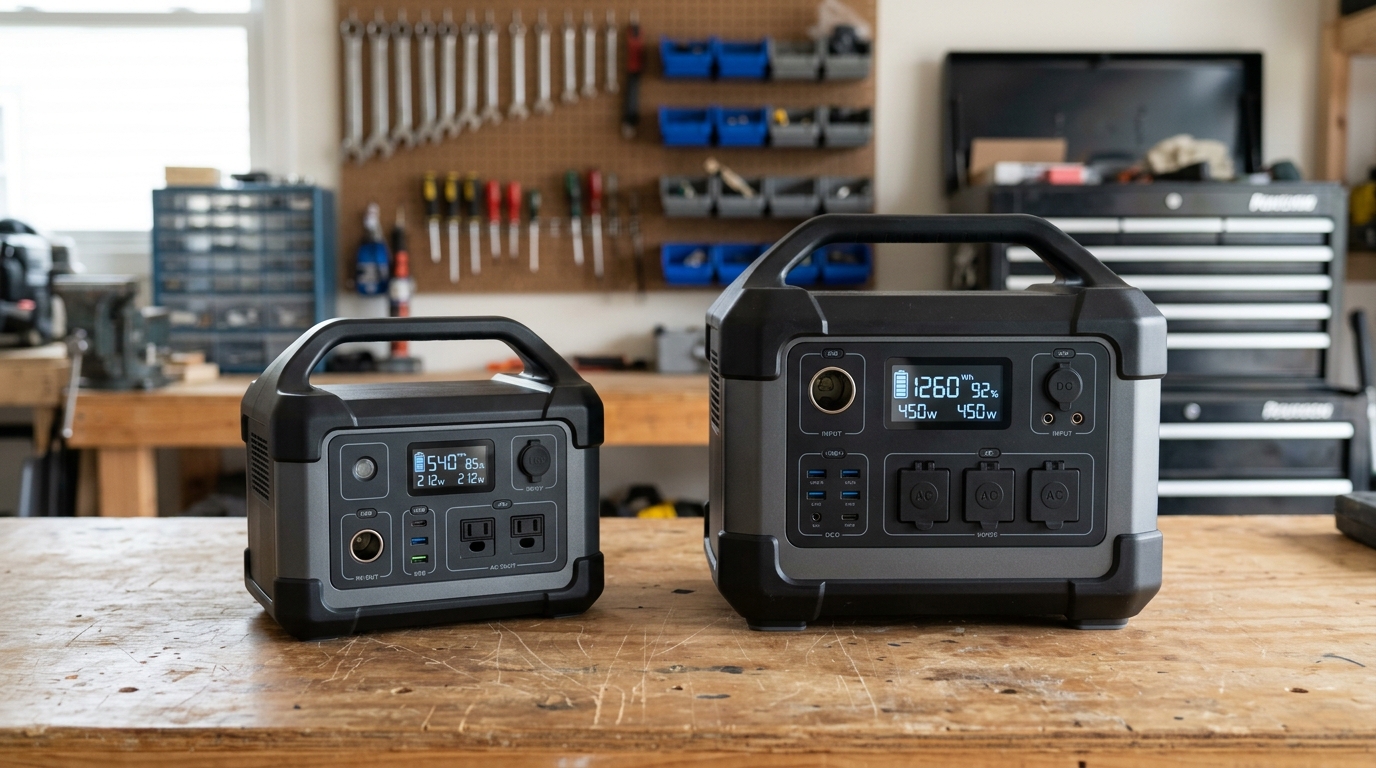
| EcoFlow River 2 Pro + 110W panel | 768Wh | ~$500–600 | Best value for most renters |
| Bluetti AC70 + solar panel | 768Wh | ~$550–650 | Compact, weatherproof (IP65) |
| EcoFlow Delta 2 + solar panel | 1,024Wh | ~$750–1,000 | Instant UPS switchover |
| Jackery Explorer 1000 v2 + 200W panel | 1,070Wh | ~$1,000–1,100 | Extended coverage, faster solar recharge |
1. Jackery Explorer 300 Plus + 60W Panel — Tightest Budget
At 288Wh and roughly 7.5 lbs, this is the entry point for renters who just need phones and a router covered — matching Profile A from our sizing chart. It won’t touch a fridge or a CPAP with a humidifier, but for communication-only coverage, it’s genuinely enough, and it’s light enough to store in a closet without a second thought.
2. EcoFlow River 2 Pro + 110W Panel — Best Value
At 768Wh with a 12.6V/10A DC output, this is a strong middle-ground pick — enough capacity to cover a CPAP without a humidifier for the better part of a night, plus wifi and phone charging, without the price or weight of the larger units on this list.
A 110W panel is a reasonable, balcony-friendly size that won’t dominate a small outdoor space.
3. Bluetti AC70 + Solar Panel — Best for Weather Exposure
The AC70 matches the River 2 Pro’s 768Wh capacity but adds IP65 dust and water resistance — a real advantage if your balcony setup means the unit itself might catch rain during charging, not just the panel.
At roughly 22.5 lbs, it’s still manageable to bring inside overnight if you’d rather not leave it exposed.
4. EcoFlow Delta 2 + Solar Panel — Best for Instant Switchover
We’ve covered the Delta 2 in depth already — its standout feature for apartment use is a near-instant UPS-style switchover, meaning you can leave a router or small fridge plugged in continuously and it takes over the moment the grid drops, with no manual switching required.
At 1,024Wh, it also comfortably covers Profile C from our sizing chart (adding a laptop and lighting to the mix).
5. Jackery Explorer 1000 v2 + 200W Panel — Best for Extended Coverage
The largest setup on this list, and also the one with the fastest practical solar recharge thanks to its 200W solar input ceiling.
Paired with a 200W panel, this is the setup we’d point toward if your balcony gets consistently good sun and you want to actually keep pace with daily usage through solar alone, rather than treating solar as a slow top-up.
See our full Explorer 1000 v2 vs 1500 v2 comparison if you’re weighing whether the extra capacity of the 1500 v2 is worth it for your specific balcony setup.
Sizing Your Panel to Your Balcony, Not Just Your Power Station
A bigger power station doesn’t necessarily need a bigger panel if your balcony space is limited — a 60–110W panel is realistic for most narrow apartment balconies, while 200W panels typically need more floor space or railing length than a lot of city apartments actually have.
Check your specific panel’s folded and unfolded dimensions before buying, not just its wattage rating, and see our solar recharge time guide for realistic expectations on how long any of these combinations actually take to recharge in real sun, not lab conditions.
The Bottom Line
None of these are “solar generators” in the sense of continuously generating power the way a grid-tied system does — they’re batteries that solar panels help recharge, which is a meaningful distinction for setting realistic expectations.
For renters specifically, the appeal is that every option here needs zero installation, zero landlord approval, and zero permits — you set the panel out, plug it in, and pack it away, the same renter-friendly principle we’ve built this entire outage-prep series around.